How to invest in crypto as a complete beginner by choosing a system over guesswork
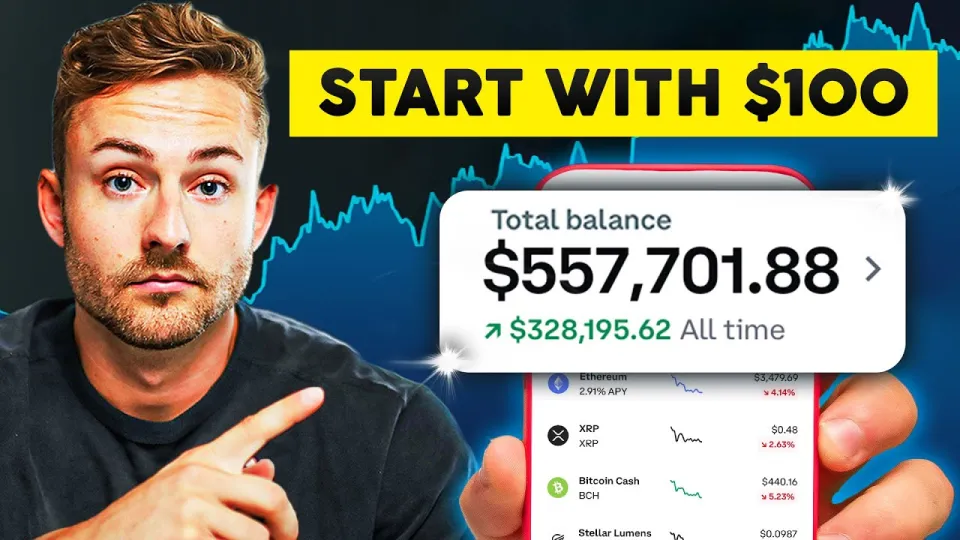
Video: How To Invest in Crypto as A COMPLETE Beginner [2025 GUIDE]
Need articles like this for your video? They help promote it on YouTube and Google — order them in the Telegram bot @sat_sit_bot. The bot writes and publishes the articles itself (with your YouTube video embedded) on popular topical websites (no ads). Free trial — 50 articles.
· based on the channel Craig Percoco
Crypto investing for a complete beginner works best as a written process rather than a series of hunches: pick a small number of large, liquid assets, learn what drives their supply and demand, size every position so a single loss cannot hurt you, and record each decision. Craig Percoco's beginner guide makes the same argument from seven years of trading experience, and you can start with his free trading course at the free trading course page before risking any money.
What crypto actually is and why beginners keep hearing about huge potential
Cryptocurrency is a digital asset recorded on a blockchain, a public ledger that no single company controls, and that structure is what creates both the opportunity and the danger. Bitcoin, launched in 2009, was the first working example; Ethereum later added programmable smart contracts, which is why thousands of tokens now exist on top of it.
The "huge potential" argument rests on market size. Crypto is still small relative to equities, gold or real estate, so money flowing in from traditional finance can move prices violently in both directions. That cuts two ways: the same volatility that produces generational-wealth stories also wipes out accounts. Treat crypto as an emerging, speculative market that deserves only capital you can afford to lose entirely, and ignore anyone promising a guaranteed path to a million.
Crypto fundamentals: market cap, tokenomics and real usage
Fundamentals in crypto mean understanding what a token does, who holds it and how its supply grows. Price alone tells you almost nothing: a coin trading at $0.01 can have a larger market capitalization than one at $100, because market cap equals price multiplied by circulating supply.
A practical checklist for evaluating any project:
- Read what the network is used for and whether anyone pays for that usage. Fees, active addresses and total value locked are harder to fake than announcements.
- Check the fully diluted valuation against the circulating market cap. A large gap means future unlocks will dilute holders.
- Find the unlock schedule for team, venture and ecosystem allocations. Tokens released monthly create steady sell pressure.
- Look at holder concentration. If a handful of wallets control most of the supply, they can move the price at will.
- Compare the project with two or three direct competitors instead of judging it in isolation.
Tokenomics is where most beginners get hurt, because a promising narrative can collapse when a cliff unlock hits the market. Write the unlock dates into your calendar before you buy, not after.
Crypto technicals: reading price without pretending to predict it
Technical analysis is the study of price and volume charts to identify where buyers and sellers have acted before. It does not forecast the future, but it does show structure: higher highs and higher lows in an uptrend, lower highs in a downtrend, and the levels where price repeatedly reversed.
For a beginner, three tools cover most of the need. Candlestick charts on daily and weekly timeframes reveal the trend; horizontal support and resistance lines mark the zones where orders cluster; volume confirms whether a move has real participation behind it. Charting platforms such as TradingView (https://bit.ly/3Xf9uvz) make this straightforward, and a moving average or two is enough to smooth out noise.
The bigger lesson is timeframe discipline. A move that looks like a crash on a five-minute chart is often a normal pullback on the weekly. Decide in advance which timeframe your plan uses and stop checking the other one.
How to make money in crypto without blowing up an account
There are only a few honest ways to profit: buying and holding an asset you expect to appreciate, trading shorter swings, earning yield by lending or staking, and building something the market pays for. Each carries different risk, and mixing them without a plan is how accounts die.
Risk management is the part that separates survivors from statistics. A workable framework:
- Cap any single position at a small percentage of your total portfolio, commonly 1–5% for speculative altcoins.
- Define the invalidation level before entry, meaning the price at which your thesis is wrong, and size the position so that hitting it costs an acceptable amount.
- Avoid leverage until you have a documented track record of profitable spot trades.
- Keep a reserve in stablecoins or fiat so drawdowns do not force you to sell at the worst moment.
- Write a trade journal: entry, exit, reason, emotion, outcome. Review it monthly.
The patterns that destroy beginners are consistent: no system, no patience, no discipline, no backtesting, no journal, poor psychology and poor risk management. Every one of those is fixable with process rather than talent.
How to buy and sell crypto and stay organized
Buying crypto means opening an account on an exchange, completing identity verification, funding it with a bank transfer or card, and placing an order. Coinbase is the common first stop for regulated fiat on-ramps; Bybit (https://partner.bybit.com/b/fortraders) is widely used for derivatives and altcoin liquidity, though derivatives demand far more experience.
Order types matter. A market order fills immediately at the best available price; a limit order fills only at your chosen price or better. Beginners should default to limit orders on liquid pairs to avoid slippage.
Organization is the unglamorous edge. Keep exchange accounts separate from long-term storage, use a hardware wallet for holdings you do not intend to trade, enable two-factor authentication, and never share seed phrases. Track cost basis and dates for tax reporting, and reconcile your records monthly. A simple spreadsheet beats memory every time.
Common beginner doubts about crypto investing
Most hesitation around crypto comes down to trust and timing, and both deserve direct answers. Skepticism is healthy: it pushes you to verify claims, read documentation and test ideas with small amounts before scaling.
On the fear of missing out: bull markets reward patience, not speed. Waiting for a setup that fits your written plan beats chasing a candle because a stranger on social media called it a 40x. On losing streaks: a run of losses usually points to oversized positions or trading without a defined edge, not to bad luck. On mentors and paid groups: real education teaches a repeatable process, including risk management and journaling, rather than promising returns. Craig Percoco's material follows that model, and his private team and Discord community are linked below if you want structure.
Useful links
- Free trading course: https://bit.ly/3VHSOeT
- Crypto trading course and private team: https://bit.ly/3xhn47c
- Discord community access: https://bit.ly/3VmrO3r
- All resources: https://bit.ly/3zeM13u
- TradingView charting: https://bit.ly/3Xf9uvz
- Bybit trading platform: https://partner.bybit.com/b/fortraders
Final thoughts on starting your crypto journey
Crypto rewards preparation far more than enthusiasm, and the beginners who last are the ones who wrote down a plan before their first trade. Start with liquid assets, learn tokenomics and chart structure, size positions so no single loss is fatal, and keep records that let you improve. Craig Percoco built this beginner breakdown around seven years of trading and investing experience, and the framework holds up whether you hold for years or trade shorter swings. If you want the free starting point, begin with the free trading course and treat every dollar you deploy as risk capital.
Key takeaways
- Crypto investing is a high-risk emerging market: only risk capital should be used, since losses can exceed the initial deposit in leveraged trading.
- Market capitalization, not coin price, tells you how large a project is; a $0.01 token can be bigger than a $100 one.
- Tokenomics, unlock schedules and real usage decide whether supply pressure will crush a token after launch.
- A written plan with position sizing, a stop-loss level and a trade journal matters more than any single indicator.
- Buying and selling happens on exchanges such as Coinbase or Bybit, and every trade should be logged with entry, exit and reasoning.
Questions & answers
How much money do I need to start investing in crypto?
There is no minimum, but the amount should be money you could lose without changing your life. Many beginners start with a small sum to test the process, then scale only after they have a documented record of following their own plan.
Is crypto investing the same as crypto trading?
No. Investing means holding an asset for months or years based on fundamentals such as usage and supply. Trading means taking shorter positions based on price structure, and it usually requires stricter risk rules and far more screen time.
Why do beginners lose money in crypto?
The usual causes are a missing system, impatience, no backtesting, no journal and poor risk management. Oversized positions and leverage turn ordinary mistakes into account-ending losses, which is why position sizing comes first.
Do I need a paid mentor or course to start?
Not necessarily, but structured education shortens the learning curve. What matters is whether the material teaches a repeatable process, including risk management and record keeping, rather than promising specific returns.
Source: How To Invest in Crypto as A COMPLETE Beginner [2025 GUIDE] · Markdown version